




The future of British farming may not arrive with a revolutionary machine or a miracle crop.
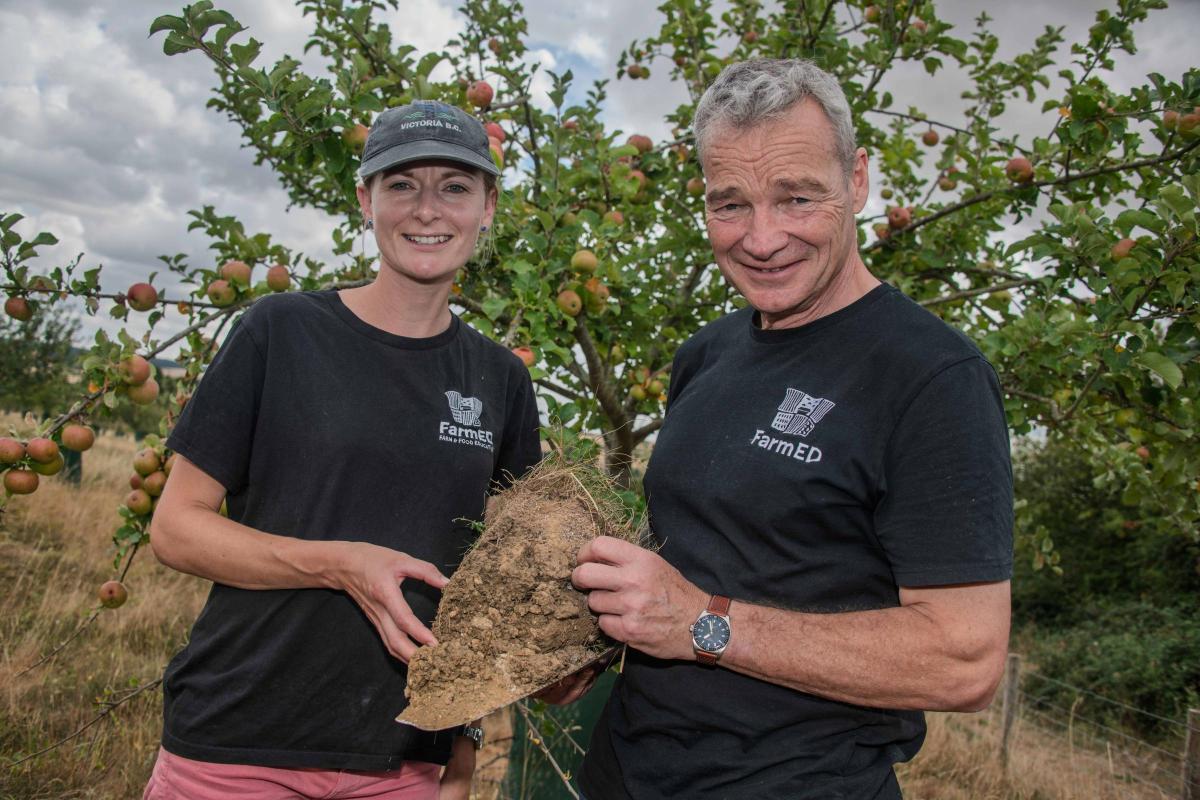
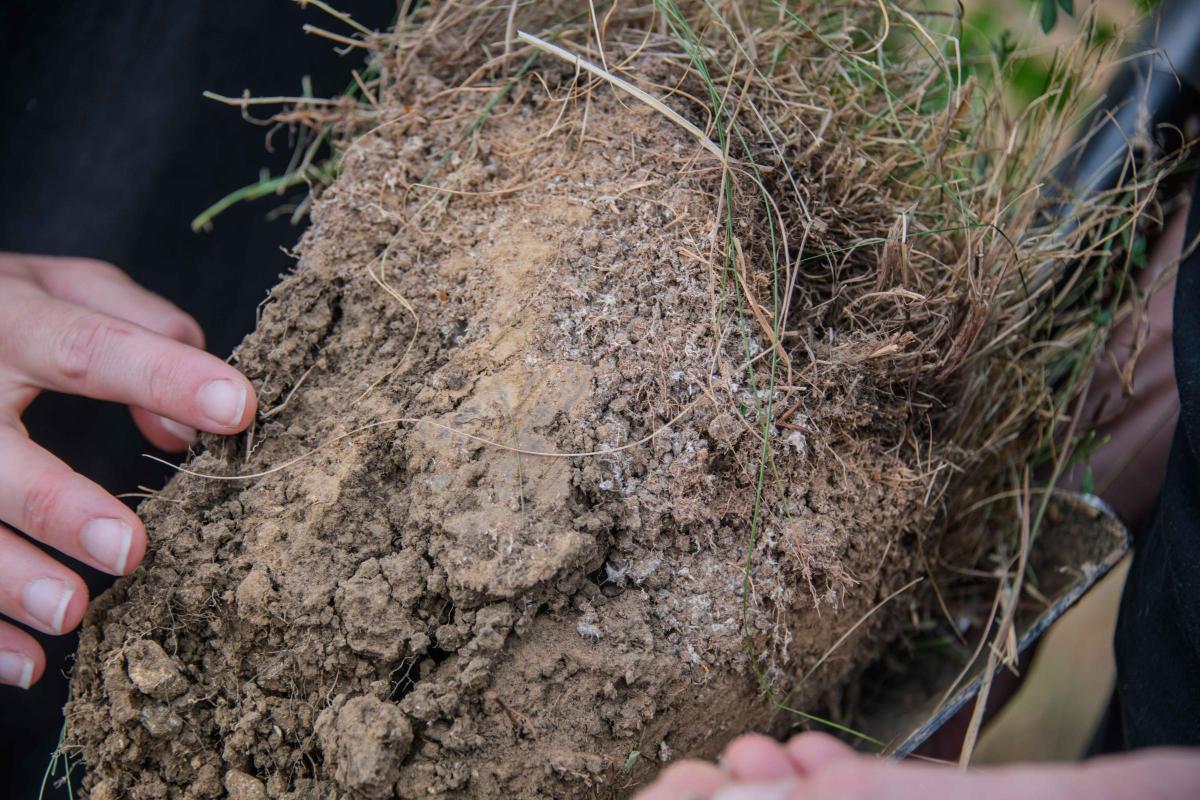
It could begin beneath our boots, in soil that smells earthy, holds precious water and, in the words of agriculturalist Ian Wilkinson, should resemble a rather good chocolate cake.
From sheep grazing through arable rotations to heritage wheat, orchards, wildflower meadows and vegetables destined for the kitchen, the thinking at FarmED is that a more resilient food system may depend on putting diversity back into the countryside.
At Honeydale Farm, home of FarmED near Shipton-under-Wychwood in Oxfordshire, that philosophy has been put into practice across 107 acres.

The farm has become what Ian, FarmED's co-founder and director, describes as a "living textbook" where farmers, growers, food businesses, policy makers, students and members of the public can see different approaches to agriculture working alongside one another.
It is deliberately not a place that claims to possess all the answers.
"What we wanted to do was to bring people together to explore the future of farming," Ian said.
"People see us perhaps as educators, but we're not really.
We're a place where people come together."
Those conversations feel particularly timely as the first British Regenerative Farming Week approaches.
Running from Saturday, September 12 to Saturday, September 19, the national campaign aims to bring together farmers, food businesses, retailers, bakeries, manufacturers and others in the supply chain to focus attention on farming practices intended to improve soil health, biodiversity and resilience.
The campaign is led by RISE Re:Gen, but at FarmED the discussion around what regenerative farming actually means has been taking place for years.
Honeydale looked very different when it was bought in 2013.

Ian said the farming around it was then characterised largely by crops such as oilseed rape, winter wheat and spring barley, with little livestock, fruit or vegetable production visible in the landscape.
For its first 12 months under new ownership, the team continued farming the land much as it had been farmed before, while recording information including yields, economics, insects, birds and water.
"After 12 months, we changed it," Ian said.
"Basically, we've fragmented the farm up.
We've changed what was a simple farming system to a really complex one, and we've done this deliberately because we wanted to have a demonstration, sort of like a living textbook, if you like, of the things that people might want to do in the future."
Livestock returned to parts of the arable rotation, while five acres were given over to vegetable production.
Orchards, agroforestry, natural flood management, wheat, rye and barley sit alongside herbal leys and cover crops, creating a patchwork intended as much to stimulate questions as provide definitive answers.
"The key purpose of our working here is really to regenerate soils," Ian said.
"We hope from that that it will stimulate interest and inspiration for others.
People come here with ideas and innovation and they're very keen to understand whether they might work or not.
"It's all very well saying we need a farming system that's got trees in the landscape or we need a farming system that doesn't use fertilisers, but what does that actually mean?
What does it actually do to yield?"

That last question matters because regenerative agriculture is not presented here as a simple choice between good and bad farming.
FarmED uses fertilisers and glyphosate in some demonstration areas while other parts are managed without them, allowing visitors to compare systems and their consequences.
Ian repeatedly returns to the point that food still has to be produced and farms still have to remain economically viable.
Regenerative agriculture itself has become an increasingly familiar phrase, but its precise definition remains more fluid than standards such as organic certification.
Ian estimates that between ten and 15 per cent of farmers might currently describe themselves as regenerative, but says the question of how those claims are demonstrated will become increasingly important.
"Regenerative farming is a way of thinking really, but how do you prove that you're regenerative?" he said.
"On the one hand we want farmers to be really flexible and to just get on with this.
On the other hand, we need some accountability.
"We should be held to account.
If we're not doing something that we say we are doing, otherwise that's greenwash, and that's not a good thing."
FarmED's agriculture lead Kate Henderson said one of the difficulties in imposing a single set of rules is that context is central to the regenerative approach.
The right decisions on one farm may not necessarily be appropriate on another, because soils, history, livestock, crops and local conditions vary.
"The whole thing about regenerative is that it's principles rather than sort of rules like organic," Kate said.
"One of the key principles of regenerative farming is context.
Every farm is different and therefore you have to change your farming methods depending on what sort of type you're dealing with, what's happened historically on that farm, what you're growing and what you're doing.
"There are some regenerative accreditation schemes that you can sign up to, but it is not like organic where there's a definitive set of standards.
It varies between different organisations."
The concern, Kate added, is ensuring the term remains meaningful for shoppers as it becomes more widely used.
"The worry is obviously if you don't have standards, it's greenwashing," she said.
"People see regenerative and they think, 'Oh wow, that sounds good,' but it's got to be backed up by something.
"I think we just need to make sure they're transparent so people know what they actually mean and what they're buying."
For those accustomed to the livestock country of Devon and the wider south-west, one part of the conversation is especially pertinent.
Ian believes grazing animals have an important role within more varied farming systems and argues that the separation of livestock production from predominantly arable areas has removed some of the benefits mixed farming once provided.
"Animals grazing through our system are really important," he said.
"If you just have crop diversification, that's useful, but if you have crop diversification and animals in it, and ideally different animals, then cows and sheep would be the perfect combination in the UK."
At Honeydale, a "flying flock" of sheep can be moved through the farm to graze forage and soil-building crops.
Ian believes such arrangements can provide opportunities for younger livestock farmers while allowing arable farms without their own permanent flocks to bring grazing animals back into rotations.
"We have young farmers around us with thousands of sheep now that have built up flying flocks that are reintegrating into our arable farms in the Cotswolds," he said.
"We are seeing regenerative practices as a result of some young people taking on risk and investing in their sheep flocks to allow us that don't have them to have flying flocks come into the farm.
"We need to have a forward-thinking group of farmers working together to bring fertility into the landscape."
Water is another theme that runs through almost every part of FarmED's thinking.
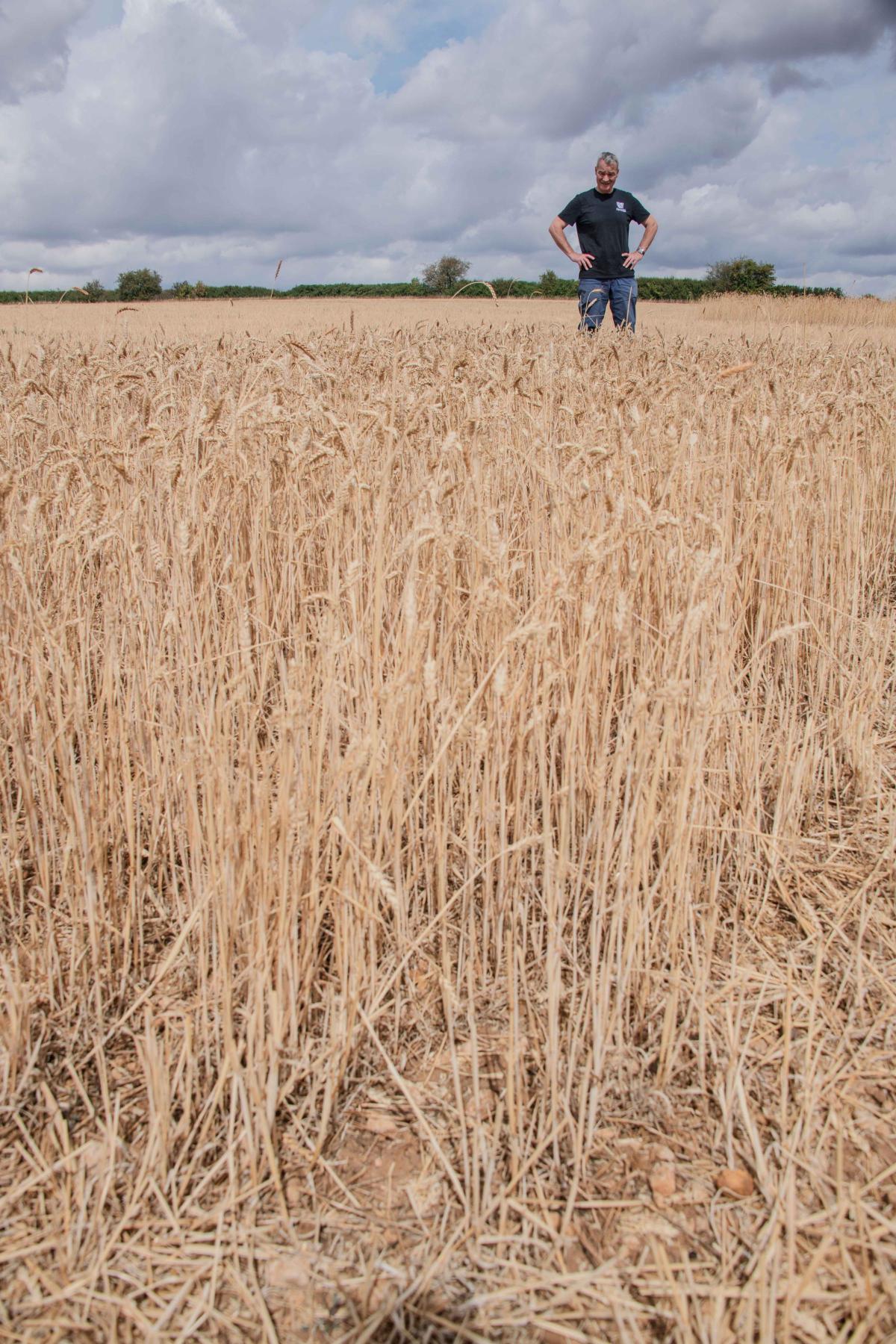
After a particularly hot and dry period, Kate and Ian are looking not only at how much water is available to crops, but whether the soil itself is capable of absorbing and storing it when rain does come.
Kate used the nearby village of Ascott-under-Wychwood, which has experienced flooding, to explain why decisions taken in a field can have consequences beyond the farm gate.
"One of the things is how do we store water on our farm, which is good for us, we want as much water on our farm, but prevent it from, when we get a downpour, rushing straight into the river, which then bursts its banks and floods the village," she said.
"It's looking at the whole system rather than just food."
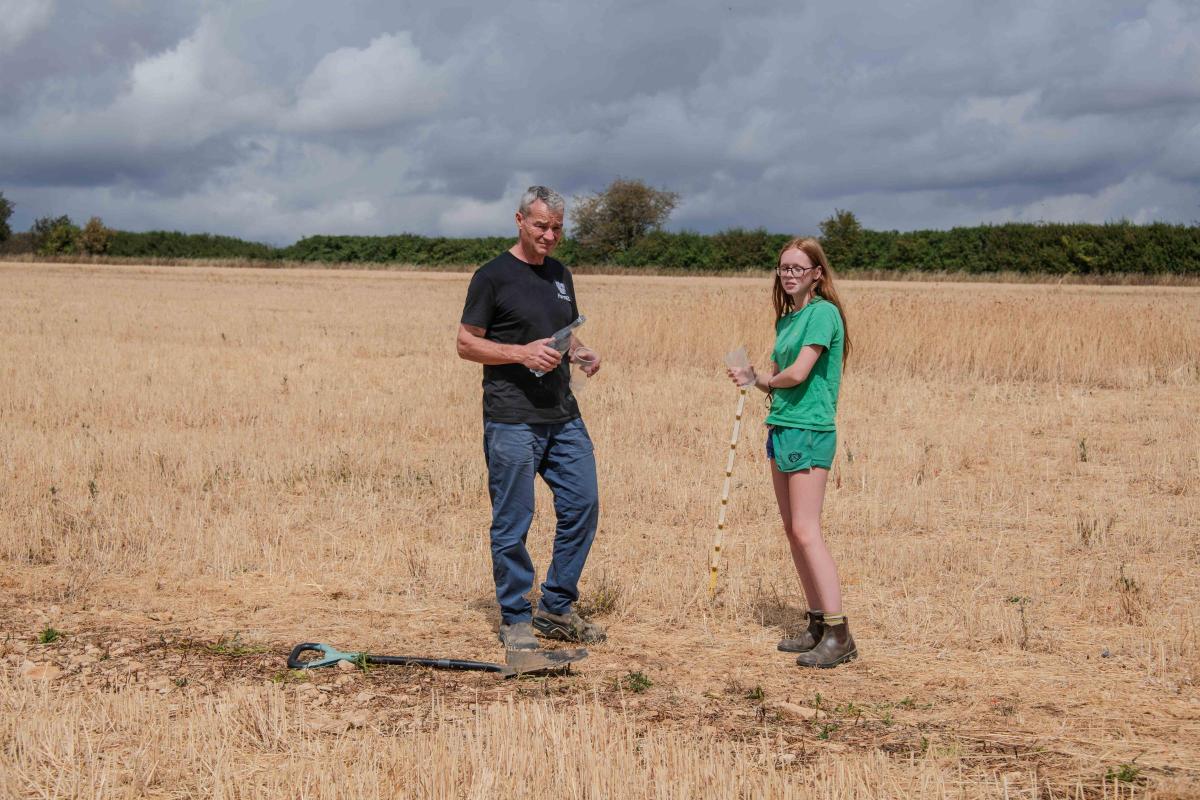
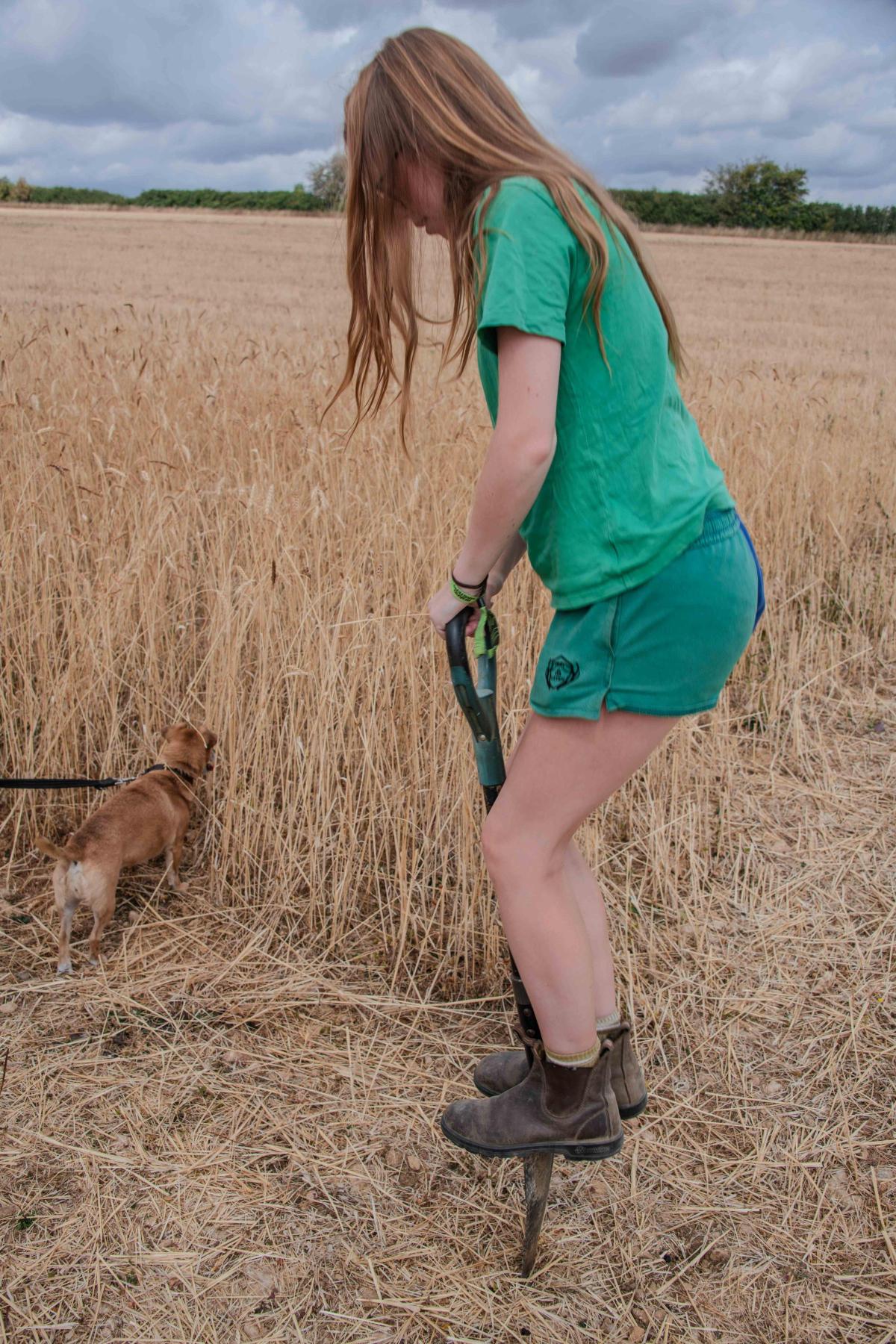
Ian said water infiltration tests at Honeydale demonstrate how quickly rainfall can enter different soils, or instead run across their surface.
Building soil carbon and reducing unnecessary disturbance are among the ways he believes farmland can become better at holding water.
"If you want food security, you've got to have water security," he said.
"This year is a really good example.
It's an extreme year, but it's a really good example of what happens if you haven't got it.
You can't grow crops."
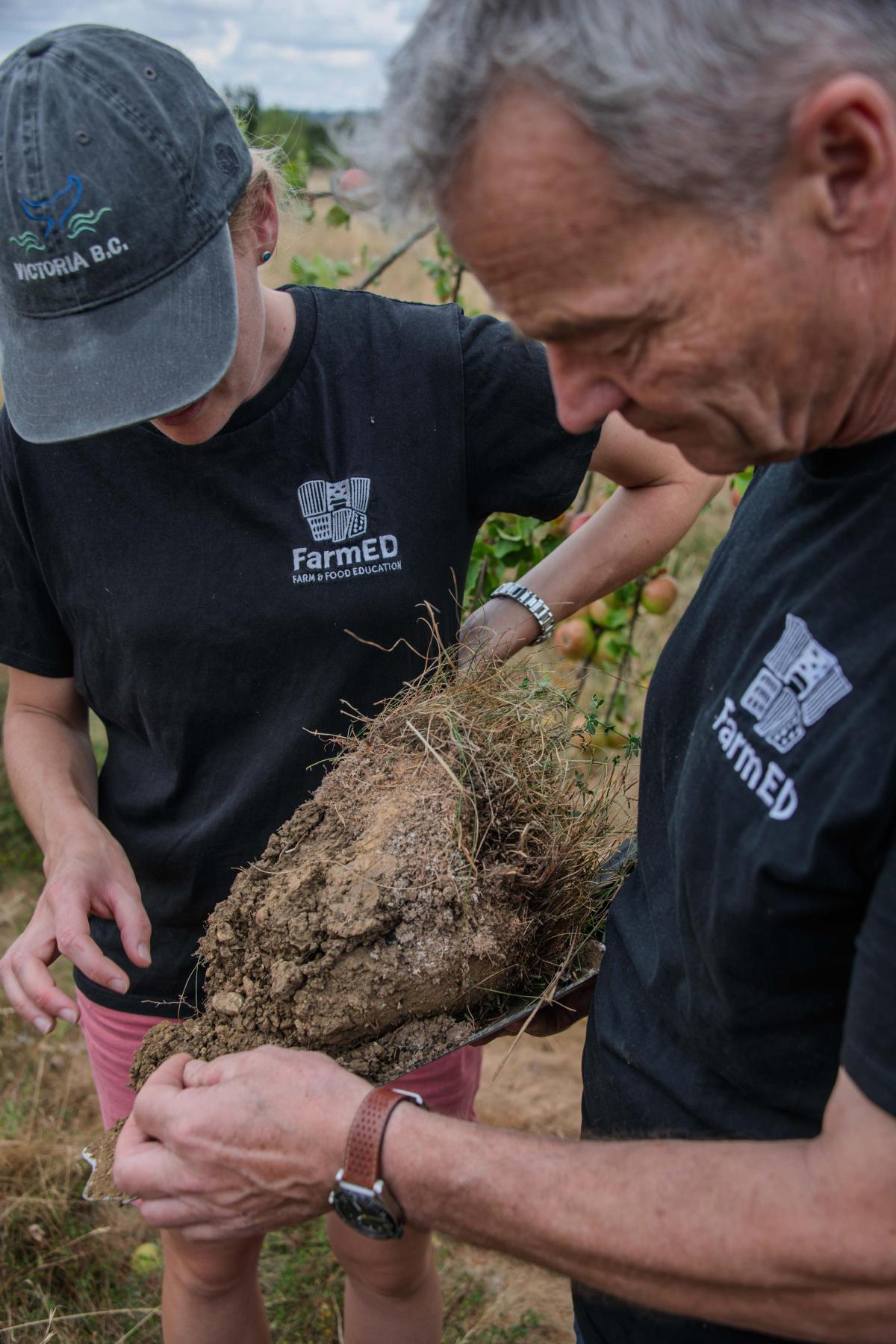
For all the scientific terminology surrounding soil, Ian's preferred visual description is considerably easier to remember.
"Good soil? It's a chocolate cake, isn't it?" he said.
Soil contains mineral particles alongside air and water, but it is its comparatively small proportion of organic matter that particularly interests the FarmED team.
Ian said grasses, deep-rooting plants and other vegetation can help return carbon to soils through their roots, while acknowledging that producing food remains an extractive activity and agriculture cannot simply sequester carbon indefinitely.
"If you want good soil, put the carbon back in, and carbon back in comes from plants like this," he said.
"Grasses and deep-rooting plants that are in the ground for a number of years are able to take carbon dioxide as a gas through photosynthesis and turn it into carbon in the soil as a solid.
"Make no mistake about it, agriculture can never be totally just sequestering carbon.
We are extractive by farming, by tilling the land or growing annual crops.
We're going to be releasing carbon.
The question is, are we releasing more than we're putting back?"
Kate said some of the most revealing indicators do not necessarily come from a spreadsheet.
FarmED sends soil samples for laboratory testing roughly every two years, but she also looks for earthworms, soil structure, smell and the rate at which water disappears into the ground.
"It's amazing how much more healthy soil smells," she said.
"It's got that really earthy smell.
I think for humans it's something that you're almost drawn to.
"We do water infiltration tests.
That's a really important one.
Some of these tests aren't the most scientific, but actually they tell us more than maybe all these lines on a spreadsheet."
Wildlife provides another measure.
Ian said the number of farmland bird species recorded at Honeydale has doubled following changes including field margins, wildflower habitat, natural flood management and greater tree cover.
Around 15 per cent of the farm, he said, is now given over to trees or woodland in one form or another, including fruit trees and shelter belts.
The farm is also part of the wider Evenlode Landscape Recovery project, bringing farmers together to work on issues including soils, water and wildlife over the long term.
It is an example of the broader approach Ian believes agriculture may increasingly have to adopt, considering not just an individual field or crop but its place within a river catchment, community and food system.
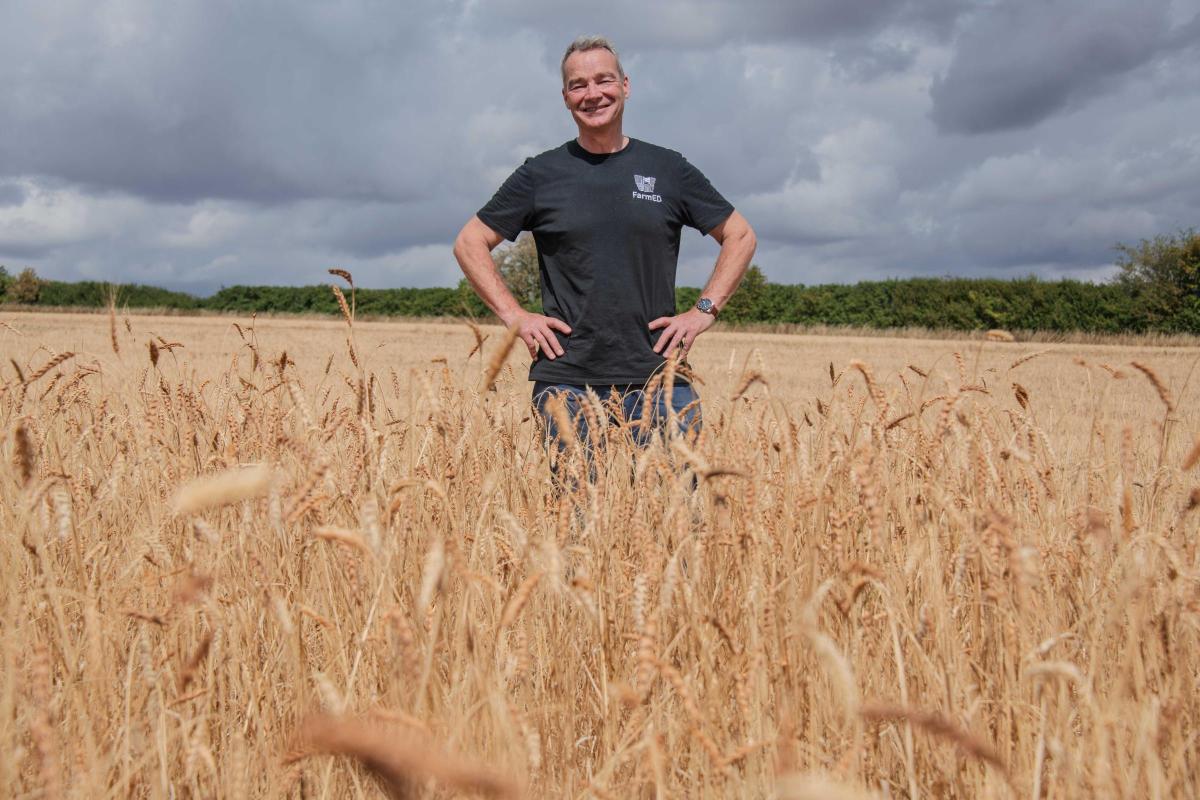
There is plenty of diversity within the crops themselves.
Honeydale's heritage grains contain around 40 different varieties, Kate said, creating visible differences in colour and shape that contrast with fields planted with a single modern variety.
"For us, heritage wheat works really well because we don't need to add any chemicals at all to it or any fertilisers," she said.
"We can sow it in the autumn, September or October, and then do nothing apart from stand and talk about it until we go in with the combine harvester in July or August."
There is, however, a considerable trade-off.
Kate said modern varieties grown conventionally with crop protection products and fertilisers can yield up to four times as much as the heritage grain at Honeydale.
"The heritage grains sound like they're absolutely brilliant by what I've just said, and they are, apart from they don't yield as much as the conventional ones," she said.
"Again, we've got that balance, that trade-off between the two."
Ian believes older genetics could nevertheless become increasingly interesting as plant breeders look for qualities such as deeper roots and resistance to drought or disease.
But he cautions against seeing crop breeding alone as a rapid answer to changing conditions.
"I think the solution does lie in the plant breeders, but it's not a quick one," he said.
"We don't know how quickly climate change is going to change the way we think about things.
"What we really want is farmers to change the way that they farm.
We really want farmers to change the practices so that we have better rotations, which will basically deliver us good-quality soils, better soils."
The diversity continues into Honeydale's kitchen garden, orchards and grassland.
Kate said the kitchen garden grows around 45 different types of vegetable, while the farm has around 250 varieties of fruit tree.
Perennial areas such as orchards, hay meadows and other grassland remain in the ground rather than being replanted each year.
What grows there is also closely connected to what visitors eat.
Kate estimates that the FarmED café is around 85 per cent self-sufficient because of the amount of fruit and vegetables produced on site, with heritage grains, heritage rye and hemp among crops that can also feed into its kitchen.
Around five tonnes of vegetables pass from the kitchen garden through the café each year.
"When we are deciding what crops to grow on the farm, one of the things is, can we use it in the café?" Kate said.
"The majority of food that's sold in the café is from the farm or it's from places that have the same ethos and as local as possible.
"When people come here on a farm walk, you get the first four senses — smell, sight, hearing and touch.
Then taste is the final one that's really important.
You get to taste the farm when you go to the café."
Not every experiment has succeeded.
One of FarmED's most difficult experiences came when a small dairy herd established on the site was hit by bovine TB.
Ian said the farm lost around half the herd in two successive years, making it increasingly difficult for the young farmer involved to continue the enterprise.
"That was probably the biggest disappointment," he said.
"There was nothing we could do.
For a young person to have that disappointment as a result of something completely out of his control was really just soul-destroying."
Kate added that losing the cattle was felt beyond the dairy itself because of the different role cattle and sheep can play within the farm's ecology.
"Having the cows here was so good for the whole farm biodiversity," she said.
"It was so good having the cattle and the sheep together.
"It's something obviously we'd love to have again, but there's such a big risk from TB in the area at the moment."
It is that willingness to show disappointments alongside successes that perhaps best explains FarmED.
Ian is emphatic that the 107 acres are not a blueprint that every farmer should copy; instead, the different enterprises exist to help people discuss what might work elsewhere.
"We're not recommending that people would rush out and do all these different things we've done," he said.
"What we've tried to do here is to show the different things that farmers might do and to enable the discussion.
"Our measurement of success is people coming here for difficult conversations.
If people are coming here and having difficult conversations about the future of farming, that's our measurement of success."
Those conversations can begin with surprisingly simple things.
Kate has found that visitors who may arrive expecting farming to be largely about crops and livestock are often astonished by the life beneath their feet.
"I don't think anyone expects soil to be exciting," she said.
"But actually when you're passing it around, people are like, 'Wow, there's so much life in there.'
This is where it all starts.
"You see where food comes from, see how the water flows, see what jobs the animals are doing, even finding dung beetles and things like that.
You sort of see it from almost an aerial view and think, 'Oh well, it's just a farm.'
Then when you really delve into things, that's when it becomes really exciting."
And as British Regenerative Farming Week puts soil, farming and food into the national spotlight, neither Ian nor Kate believes change has to begin with something dramatic.
For Kate, one word sums it up: "Diversity."
For Ian, the starting point is the choices made every day by the people who eventually eat what farms produce.
"I would say support whole foods grown reasonably locally," he said.
"Small decisions add up, because we all participate in farming three times a day when we eat food.
People don't think they do, but we do.
"Little decisions make a difference.
It might be a difference to animal welfare, it might be to the way the food is grown, or it might be to the way the water is cycling in the district.
Every time, it's small decisions."
Kate added: "You might find a new favourite food, try a new vegetable, plant something new in a garden.
Farmers can put in a wildflower margin.
"The more diversity we can get in the landscape, in our diets and in the food producers that are out there, the better for everyone, I think."
More information about RISE Re:Gen is available at https://riseregenflour.co.uk/products/.


Share