



Toyota Hilux BEV review: by Chris Johnson
— At a Glance
- Price From around £45,000 + VAT
- Battery 59.2kWh
- Drive Permanent all-wheel drive via dual eAxles
- Claimed range Around 150 miles
- Real-world range Approximately 120–130 miles
- Payload Just over 700kg
- Towing capacity 1,600kg
- Body style Double Cab
-
Verdict: 7/10
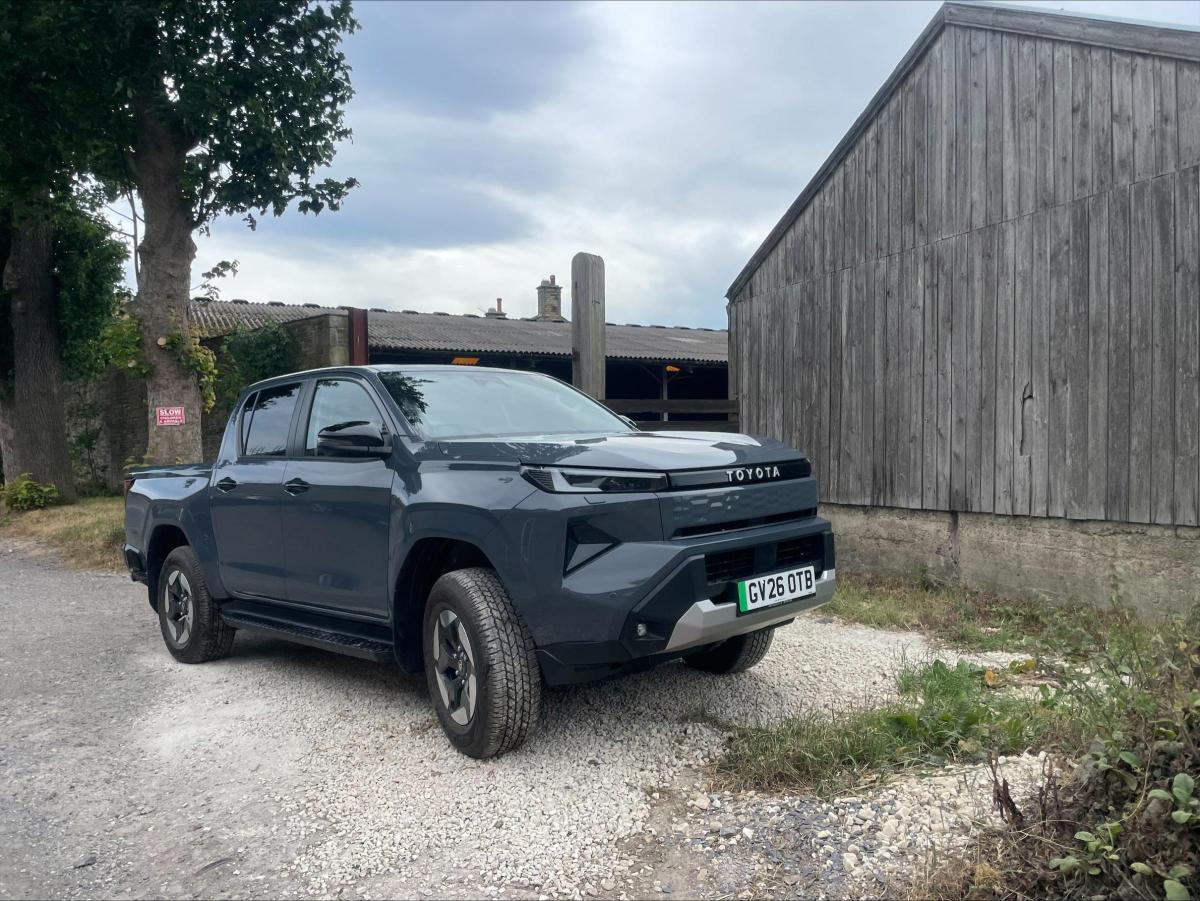
Now, in its ninth generation, Toyota has replaced the diesel engine with an electric drivetrain (Image: Chris Johnson)

Buy one if...
Your business has a green policy, you're working on environmentally sensitive projects, or you regularly enter congestion or low-emission zones.
Wait if...
You cover big miles, carry heavy loads or regularly tow at the limit.
The Toyota Hilux doesn't need much of an introduction. Few vehicles have earned such a formidable reputation for toughness, reliability and outright durability. Whether it's crossing deserts, climbing mountains or spending a lifetime on a building site, the Hilux has become the benchmark for pick-up trucks worldwide.
Now, in its ninth generation, Toyota has attempted its biggest revolution yet by removing the diesel engine altogether and replacing it with a fully electric drivetrain.
After a week living with it, one conclusion kept coming back to me.

The Hilux BEV still needs to be kept on a short leash.
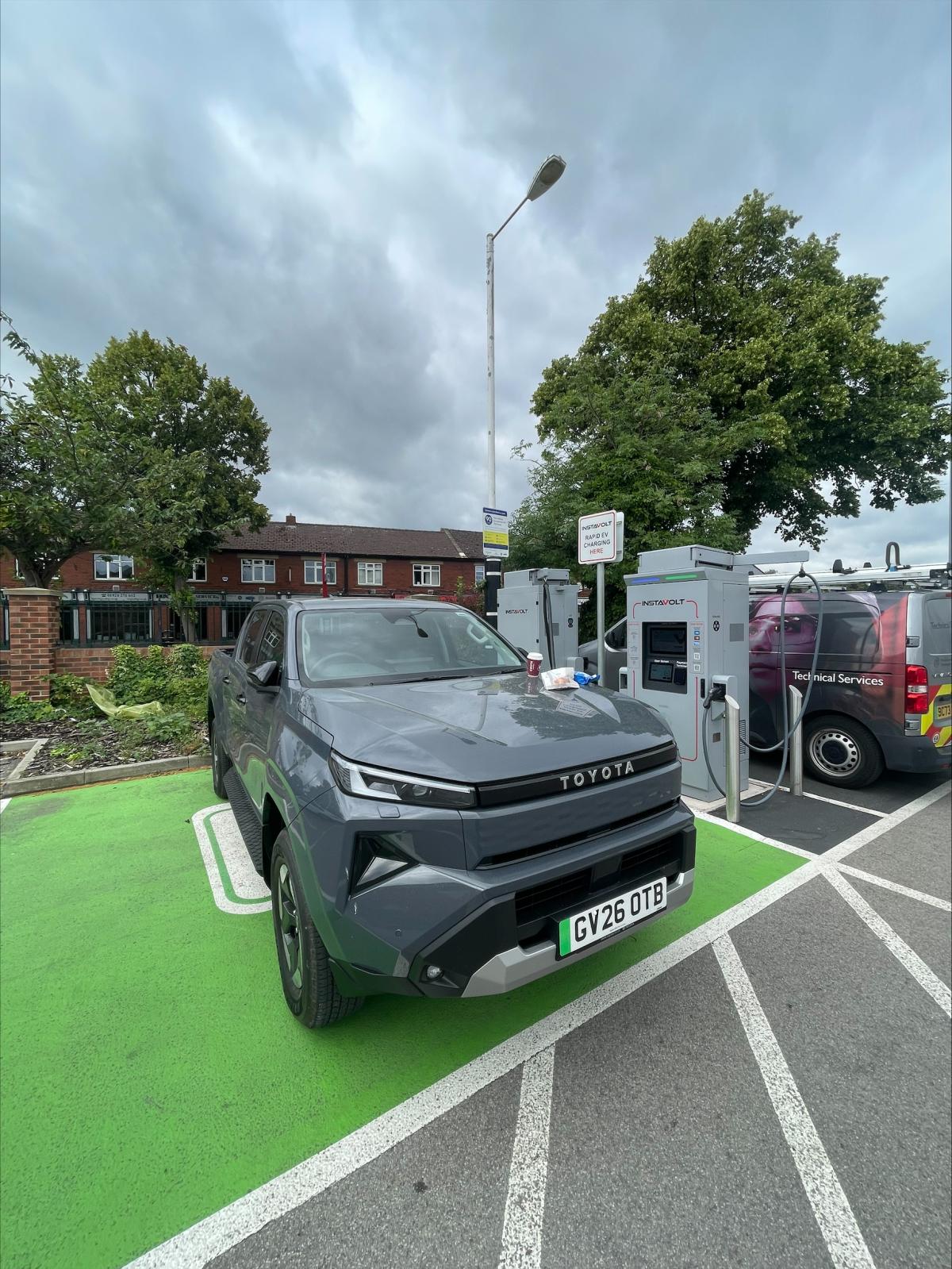
The leash, naturally, is the charging cable.
Toyota quotes around 150 miles of range, but as ever, that's measured in ideal conditions. No payload, no trailer, no passengers, no air conditioning and, presumably, with the wind behind you. In the real world I found myself 20 to 30 miles short of the official figure, which immediately raises questions for anyone expecting the Hilux to work as hard as its diesel predecessor.
Then come the compromises.
Payload drops to just over 700kg, while towing is capped at 1,600kg. Once you factor in the weight of the trailer itself, there's not a huge amount left for the machinery you're actually trying to move. A one-tonne excavator is about as adventurous as I'd want to be.
For tradespeople, farmers and contractors, those figures will matter far more than 0–60 times or touchscreen graphics.

But before writing it off, there's another side to the story.
Strip away the battery and this remains unmistakably a Hilux.
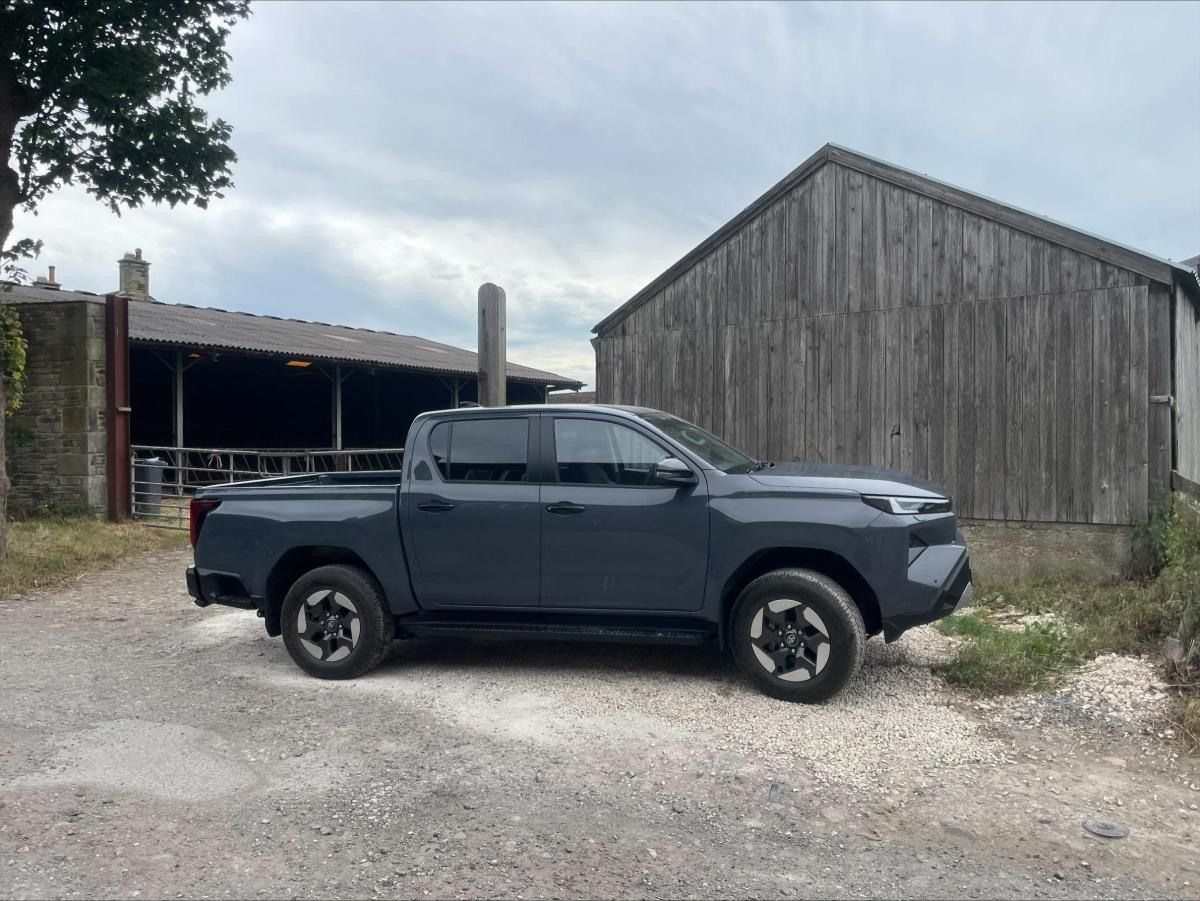
It retains the traditional body-on-frame construction, the commanding driving position and the chunky styling that has made it such an icon. Available exclusively as a Double Cab, the 59.2kWh battery powers dual eAxles to provide permanent all-wheel drive, giving it genuine off-road credentials and the ability to reach job sites whatever the weather or terrain.
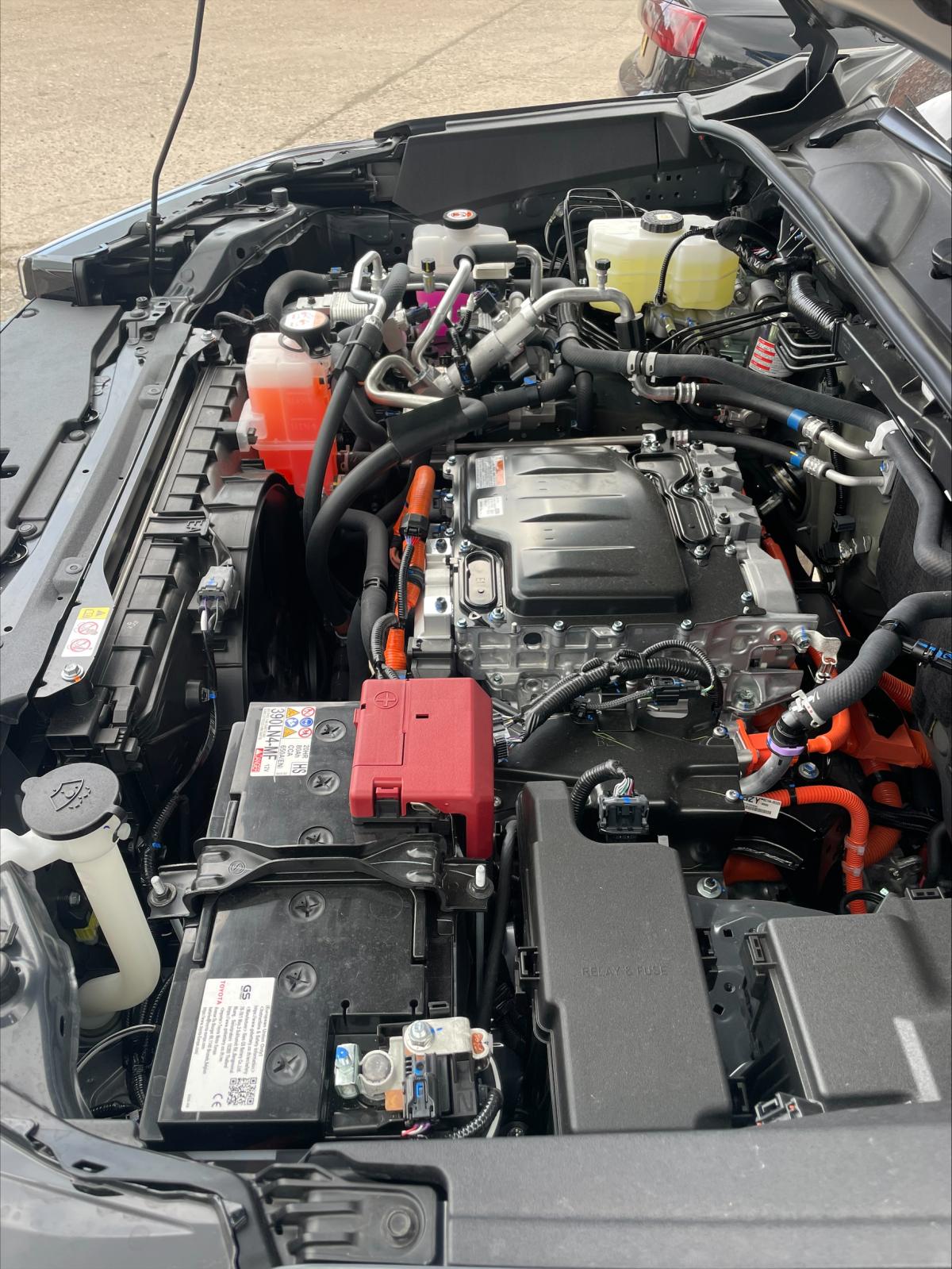
Toyota has clearly engineered the battery with durability in mind too. It's heavily protected against water, dust and impacts from rocks and roots beneath the vehicle, while the simplicity of an electric drivetrain means fewer moving parts, lower servicing requirements and potentially reduced running costs over the life of the vehicle.
Whether those savings survive depreciation is another question entirely. Hilux residual values have always been among the strongest in the business, but predicting the used market for electric pick-ups is far less straightforward. Private buyers don't always share the same environmental priorities as corporate fleets.
Reading this back, I know it sounds like I'm being overly critical.
That's because I am.

A working pick-up lives or dies by what it can carry and tow. You wouldn't clean out a barn with a spoon… even if it was electric.
And yet...
The Hilux BEV is genuinely excellent to drive.
Electric torque transforms the way it moves. It's smooth, immediate and almost effortless around town, while the absence of engine noise gives the cabin a level of refinement that diesel Hilux owners have never experienced. It encourages a more relaxed driving style and somehow makes even the daily commute feel less stressful.
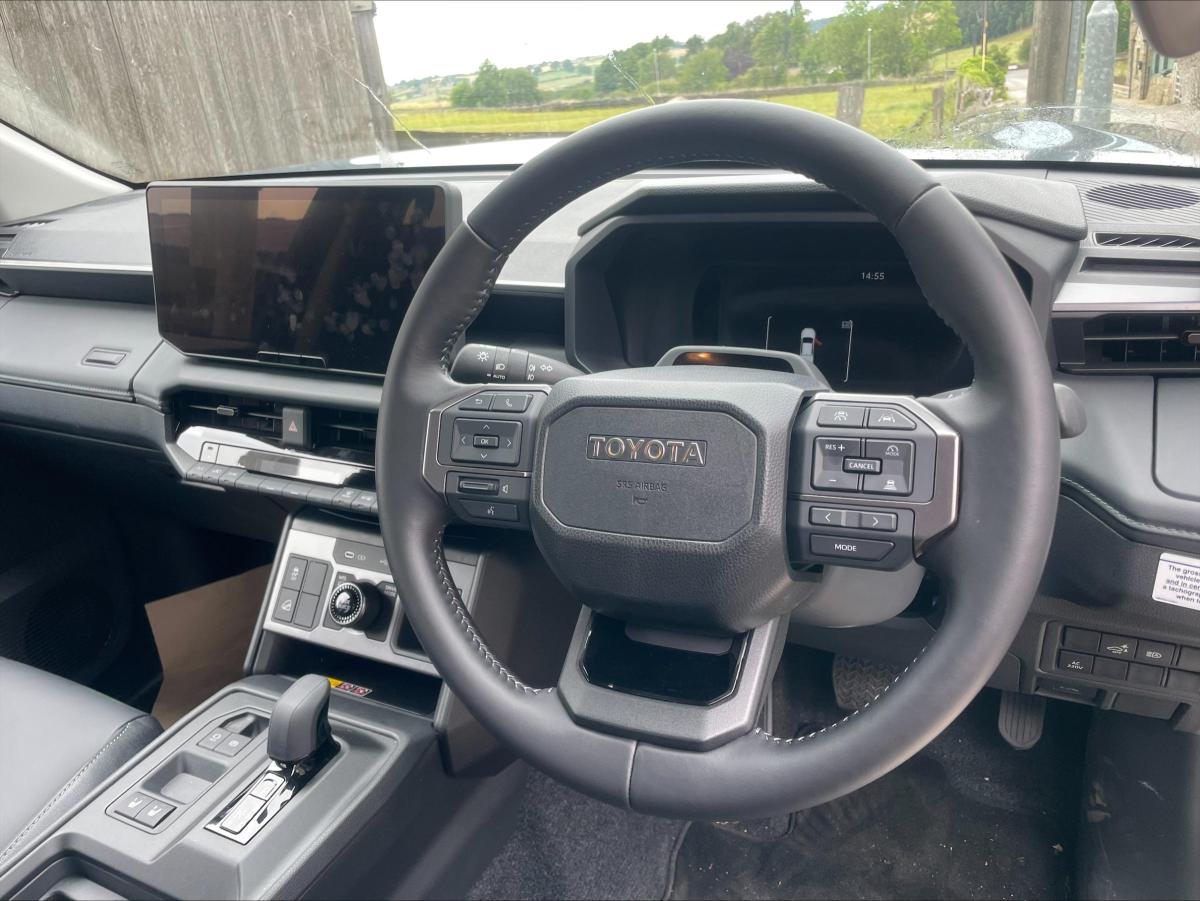
The technology is another huge leap forward. Electric power steering replaces the traditional hydraulic setup, only drawing energy when assistance is required. That improves efficiency while also reducing steering kickback when you're picking your way across rough terrain. Mind you, decades of off-roading mean I'll still be driving with my thumbs outside the steering wheel.

Old habits die hard.
Visually, Toyota has got it absolutely right. It still looks every inch the Hilux, with a muscular stance and plenty of road presence. Throughout my week with the truck, it attracted more than a few curious looks from other motorists, many trying to work out exactly what was different.
Starting at around £45,000 plus VAT, depending on specification, it's priced broadly alongside the diesel 48V version. That means the decision isn't really about money.
It's about purpose.
If your business operates in low-emission zones, forestry, environmental projects or corporate fleets where sustainability targets carry real weight, the Hilux BEV makes genuine sense.
For everyone else, I can't help feeling it's arrived a little ahead of its time.
Perhaps Toyota thinks so too. With hydrogen fuel-cell technology already being explored for future Hilux models, there may yet be a solution that delivers zero emissions without asking owners to compromise the very qualities that made the Hilux legendary in the first place.
Until then, the Hilux BEV remains something rather unusual.
It isn't the Hilux every buyer needs today.
But it might just be the Hilux we'll all need tomorrow.
Reviewer Verdict
What I liked
- Effortless electric performance
- Exceptionally quiet and refined drivetrain
- Genuine Hilux toughness remains intact
- Permanent all-wheel drive capability
- Excellent driver technology
- Strong styling and road presence
What I didn't
- Real-world range is limited compared with diesel alternatives
- Reduced payload affects working practicality
- Towing capacity will not suit every operator
- Future residual values remain uncertain
Would I buy one?
Yes — for the right job.
If I was running a forestry business, environmental project, estate management operation or a company working within low-emission zones, the Hilux BEV would make a very convincing case.
No — if I needed maximum versatility.
If I regularly towed heavy machinery, carried full payloads or covered long distances every week, I would stay with the diesel for now.
The Hilux BEV proves that electrification does not have to remove the character of a working vehicle.
It still feels like a Hilux.
It just asks you to plan your day a little more carefully.


Share