


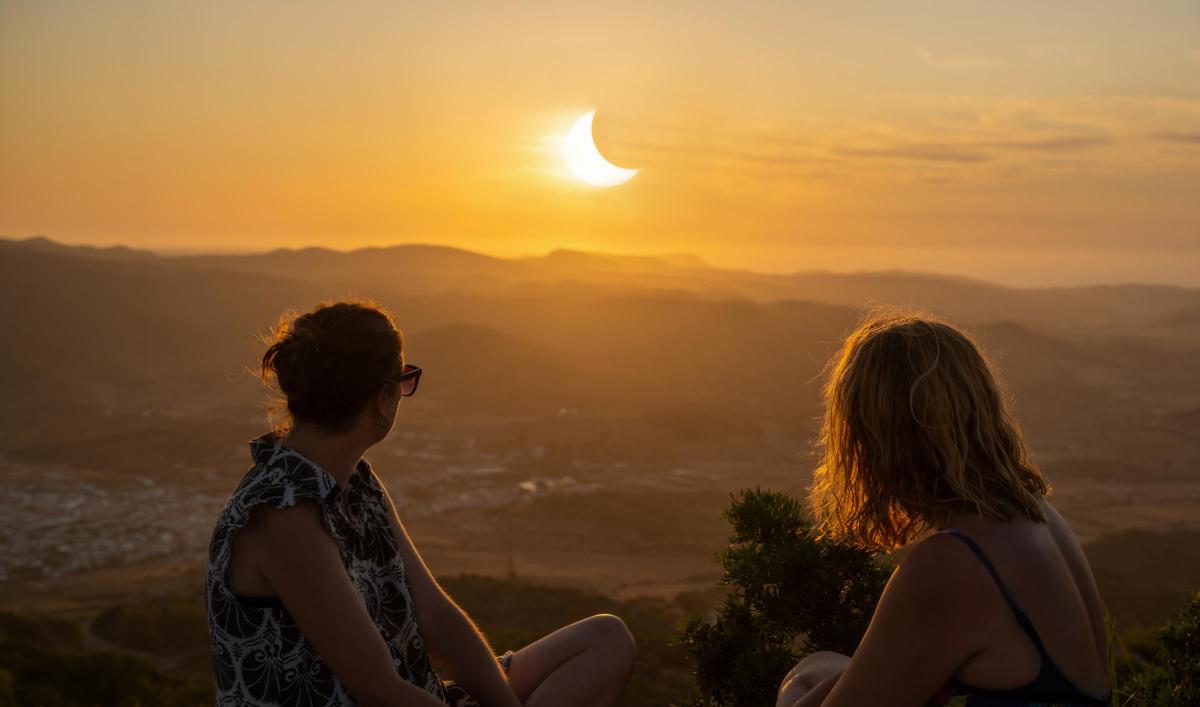
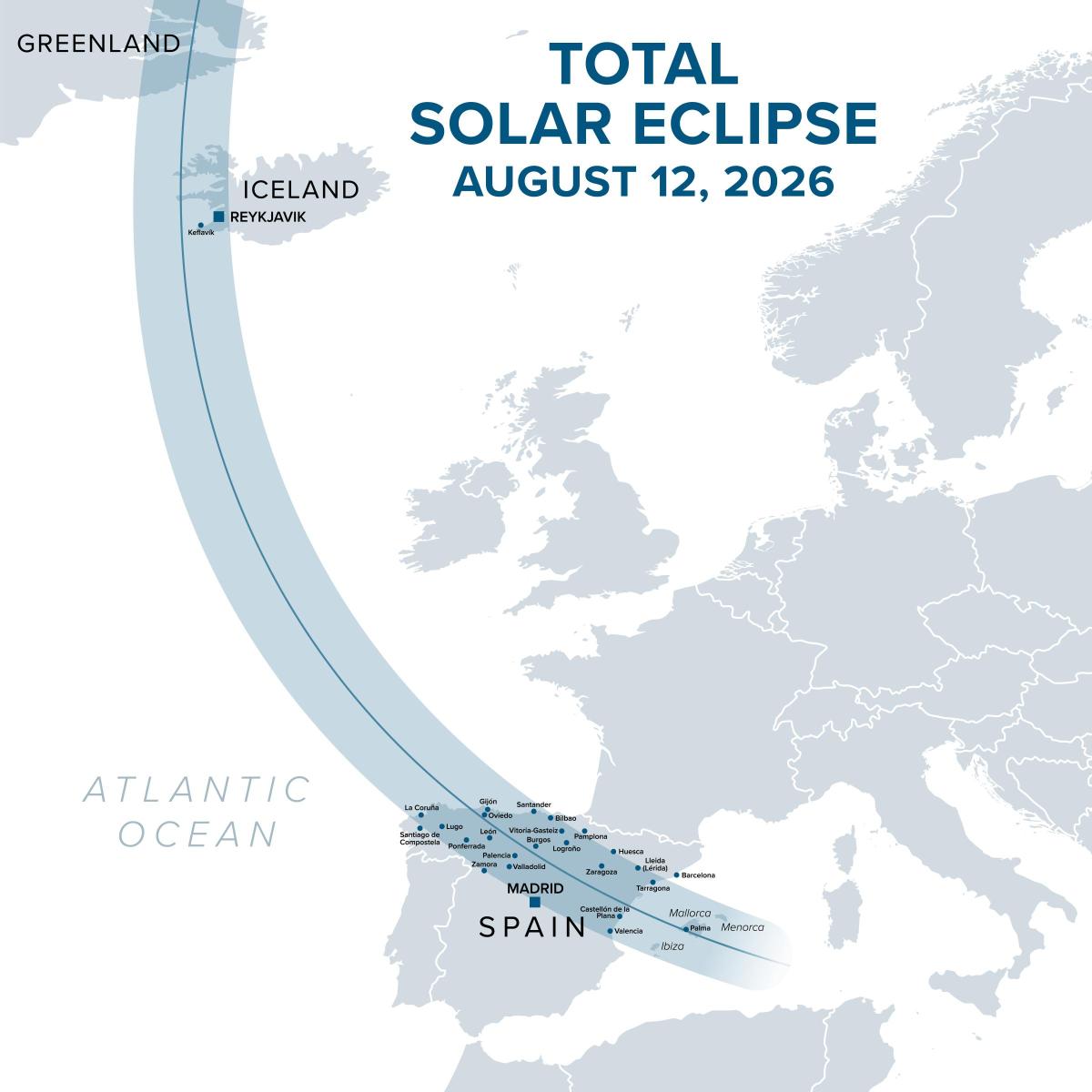

The skies in the South West will stage a remarkable double bill later today (August 12), with a partial solar eclipse at sunset, followed by the Perseid meteor shower after dark.
Tonight, the moon will move across the face of the sun in the biggest partial solar eclipse visible from Britain since 1999. As daylight ebbs, the spectacle will give way to a second celestial treat: the annual Perseid meteor shower, with shooting stars expected to streak through the night.
The South West is set for an impressive celestial display, with more than 93% of the Sun expected to be obscured at the peak of the partial solar eclipse.
Cornwall will see the greatest coverage, at 95.4%, followed by Devon at 94.6%, Somerset at 94.1%, Dorset at 94% and Wiltshire at 93.5%.
The exact timing of maximum eclipse will vary slightly across the region, but the peak will occur between 7.14pm and 7.16pm.
Those hoping to catch a glimpse should look towards the west to west-north-west. The eclipsed Sun will be low in the sky, sitting only around 10–15 degrees above the horizon at its maximum, making a clear, unobstructed view particularly important.
For farmers, there is a distinct advantage: plenty of open countryside and the freedom to choose the best vantage point on their own land. With the right spot and a clear horizon, they should have a front-row seat for one of the year’s most striking natural spectacles.
The latest forecast is looking sunny, with daytime temperatures of around 26C and an evening temperature near 16C.
Never risk your sight
This is a partial eclipse, not a total one. The sun’s surface will remain visible throughout and looking directly at it can cause permanent eye damage.
Ordinary sunglasses are not safe. Anyone observing should use undamaged eclipse glasses certified to ISO 12312-2, or use a pinhole projector for indirect viewing. Binoculars, cameras and telescopes must never be pointed at the sun unless purpose-designed solar filters are fitted over the front optics.
Even a cloudy sky does not make direct viewing safe.
Then come the Perseids
The eclipse may be the early-evening headline act, but the night belongs to the Perseids.
The shower peaks overnight from August 12 to 13, with the strongest activity expected between about 3am and 5am BST. This year’s near-new moon should leave skies pleasingly dark, improving the chance of seeing fainter meteors.
For the darkest skies, it may be worth making the journey to Exmoor National Park, Europe’s first International Dark Sky Reserve.
There is no need for binoculars or telescopes: meteors are best seen with the naked eye. Find a safe place, settle into a reclining chair or on a mat, look around 40 to 60 degrees away from Perseus, and give your eyes at least half an hour away from white light. Then wait.


Share