


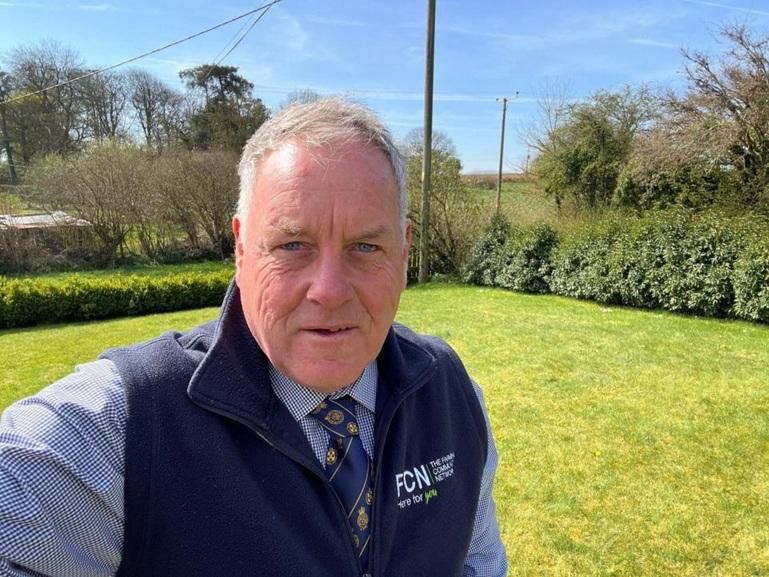

South West Farmer caught up with Stephen Dennis, the south west regional manager for the Farming Community Network (FCN), to discuss his views on intergenerational farming and the challenges of passing farms on smoothly.
He shares his insights on how families can navigate retirement, build trust, and hand over the farm successfully from one generation to the next.
What do you see as the biggest barriers preventing older farmers from retiring or stepping back from their businesses? What are the main factors that make retirement difficult, and what tends to be the biggest obstacle?
I think every farming situation is different. It depends on factors such as whether there are family members interested in taking over the farm and whether the business has diversified into other areas.
The challenge is that there is no single, clear path for succession or retirement because there are so many individual factors that need to be considered and worked through.
Many farms are still managed and controlled by the older generation. One of the key areas is creating opportunities for the younger generation to become involved and bring fresh blood into farming.
While there are certainly farms where the next generation is ready and willing to take over, there are also many where that desire simply isn't there. In those cases, succession becomes much more difficult, as there may be no obvious successor in the family.
What options are available for farmers who are ready to step back, hand over the business, and enjoy retirement? What does retirement typically look like for farmers, and what plans do they put in place to make that transition?
We encourage farmers to look at their retirement strategy and plan for the future. Farming is something many people continue working at without really considering the possibility of living a different, perhaps easier, way of life through semi-retirement or retirement.
We've looked at this through studies we've undertaken with Exeter University. For many farmers, there simply isn't a retirement plan in place.
It's one of the reasons why the Farming Community Network’s theme in the South West for this year is ‘Sharing the Farming Future’. We are asking questions such as: What is the future of your farm? How will responsibility transition from the older generation to the younger generation? And what might that mean for your particular situation?
It sounds like the kind of discussion that should be happening naturally, yet it often isn't. Instead, it's pushed aside for another day when really it needs to be at the forefront of people's minds. We need to be practical about the future and about protecting farms through the generations.
For many people in farming, where the business is also their home, it can be very difficult to step away. Sometimes it's easier to avoid dealing with the reality of a situation than to address it directly. However, we've seen examples where people have made those considerations and later wondered why they didn't do it sooner.
We're encouraging people to talk about the different possibilities available to them. One option is shared farming. There are many young people who would like to get into farming but don't have the opportunity because of the cost of buying land, livestock, machinery and other assets. A share farming arrangement with someone who is already established can work very well in some circumstances.
Contract farming is another option that may suit certain businesses. Tenancy arrangements can also be a viable route for some.
One thing that is key to all of these options is having people who can work well together. The older generation needs to value the contribution of younger people, and younger people need to respect and value the experience of the older generation. That mutual respect is essential to making any partnership arrangement work.
What we've seen is that there is an older generation that needs younger people to become involved, while there is also a younger generation looking for opportunities. Finding ways to bring those two groups together is something we're actively exploring.
In Scotland, they have created what is known as the Scottish Land Matching Service. They have dedicated people whose role is to connect farmers with potential opportunities and partnerships. We think it's a good idea and very much aligned with the sort of approach we're discussing and considering ourselves.
In everything we do at the Farming Community Network, we sit down with farmers and listen to where they are in their journey. Our aim is always to listen, not to judge.
What steps can farmers take to create more opportunities and choices for the future of their farm and family?
Whatever the particular challenge might be within the farming community, we're always looking to help create options for a way forward in those situations.
I think a lot of it comes down to building trust. For a retiring farmer, relinquishing responsibilities to a young person who isn't part of the family requires an enormous amount of trust.
Is that where the Farming Community Network can help?
We often act as a bridge, helping to mediate and support the development of good relationships. Obviously, there is also a need for professional advisers to be involved.
One of the obvious barriers for the older generation, particularly those who own their farms, is the concern that stepping back could affect their status as active farmers. There is a fear that this could create disadvantages from a taxation perspective when handing the farm on to family members if they are no longer considered to be actively farming.
However, if it is structured in the right way, it is still possible for them to be regarded as active farmers, even if they are no longer providing the main labour into the day-to-day running of the farm. There are ways of managing that situation.
I think that has been one of the major stumbling blocks. The fear of losing Agricultural Property Relief. However, there are ways of mitigating that risk if people receive the right advice from the right professionals.
You can sign post people in the right direction?
Yes. In our conversations, what we've found is that whatever issue you're dealing with, it's much better to approach your legal team, your solicitor, or your accountant with a plan of what you want to do, rather than going to them without a clear idea.
If you can go to them with a plan of the direction of travel you want to take, they can then help work through the finer details and determine the best way of achieving that outcome.
A lot of what we're trying to do is help the older generation look at their options, particularly those approaching semi-retirement from farming.
Every farmer is an individual, and every farming business is different. The right outcome for one person may be very different from the right outcome for someone else. Ultimately, it's about creating a smoother succession process.
In your experience, what helps older farmers feel confident enough to hand over the reins? It must be a very difficult transition, both practically and emotionally.
For the older generation, farming has often been their entire life. In many cases, the farm has controlled them rather than them being in control of the farming business.
What we're trying to encourage people to recognise is that many others are in the same situation. One of the ways we support those who are moving into semi-retirement or retirement is by helping them look at life outside, or on the edge of farming.
For example, our Vintage Farmer groups focus on socialising with like-minded people. The group leads may bring in speakers on relevant topics, organise events, and help people build connections. This allows farmers to see that there is life beyond the full-time, 24/7 farming experience, and I think that's a key part of the transition.
We have a number of people who have taken that step and benefited from it, and we can share their experiences with other farmers who may be considering a similar route.
Is there still a mindset in farming that you keep working until the very end?
It's changing, but the narrative still needs to change further. We need to normalise the idea that, like in any other industry, people eventually retire. It might not be at 67 in the farming community, it may be closer to 75, but there needs to be a more accepted expectation that retirement is a natural part of the farming journey.
So, a lot of this comes down to the expectations of the older generation?
Yes. It's about being willing to relinquish responsibilities before it becomes necessary.
In some ways, we have contributed to the difficulties younger generations face in coming into farming. I remember visiting a farm many years ago where the father was 94 and the son was 67. The father was still writing the cheques and managing the payments.
In many respects, that was about control. There are numerous situations where farmers have simply followed the example set by their parents and have never really challenged whether that way of thinking is still the right approach for their own circumstances.
As a result, responsibility is often held onto for much longer than necessary, making it harder for the next generation to take on the leadership of the business.
What support would help young people access leadership opportunities in farming?
Young people are often afraid of letting the family down. If they are not from a farming family and are joining externally, they may also lack confidence in how to build trust and prove their worth.
If you take two identical family farming situations, one built on encouragement and one on discouragement, the one with encouragement will always go further than the one with discouragement.
People should not be afraid to make mistakes. It is not the mistakes that matter, but how you recover from them and move forward. The experience gained through mistakes often becomes the foundation for building good and profitable businesses.
The ability to adapt is also extremely important. There are so many changes happening in agriculture, and adaptation is key to reaching where we need to be. We also need to be talking about business planning, what is in the five-year plan, what is in the ten-year plan.
For some of the older generation, there is no five or ten year plan. Instead, the focus is more on survival rather than advancing the business in a more structured way.
Older generations also need to allow younger people to make mistakes. We have all made mistakes in the past and, hopefully, learned from them and moved on. Failure is a part of success.
For the younger generation, gaining experience from other farming practices can be very valuable. For example, going away to places like New Zealand to learn more about the industry can be a significant benefit to them.
How important is mentorship during the transitional period, and what does a successful handover look like?
In a mediation, the aim is to get everyone to listen to what is being said while also being willing to stay silent and reflect. That is often easier said than done.
One of the key points is that if you do not allow the farm to be handed on at an appropriate time, there is a risk that those involved may no longer be around to do so. In some cases, family members may also go off and pursue other opportunities. Because of this, there can be an element of urgency within these discussions.
There are many examples now where people have handed over the farm earlier than they originally expected and have actually enjoyed the experience of remaining semi-involved, while still having an influence.
I think the sooner there is a genuine handover, with appreciation for every generation involved, the better. The older generation should value the younger generation, and the younger generation should value the older generation. That balance is key.
It also sets a precedent around respect for elders, while recognising that everyone brings a different perspective to the business. Applying mutual respect is essential, because there are many examples where the younger generation has introduced changes that have benefited the business and family experience.
What is the first step, and where should farmers start if they need help?
Don’t be afraid of where you are, whether it feels successful or unsuccessful. The key question is, what direction of travel are you intending to take? For some, that may mean the farm is passed into another family member’s hands, while for others it may involve working in partnership with an external contractor.
Once you've made a decision, just go with it.
As your Farming Community Network, we're here to help, support, and listen, not to judge. We will talk through your options and provide a little bit of steering in the right direction. We won’t point you towards specific businesses or companies as that isn’t our role.
The FCN can also share experiences from other farmers who have taken similar routes, helping you understand what may work best for your situation.


Share