



Good communication, careful colostrum management and consistency are helping drive herd performance at an award-winning Wiltshire dairy, where attention to detail starts from the moment a calf is born.
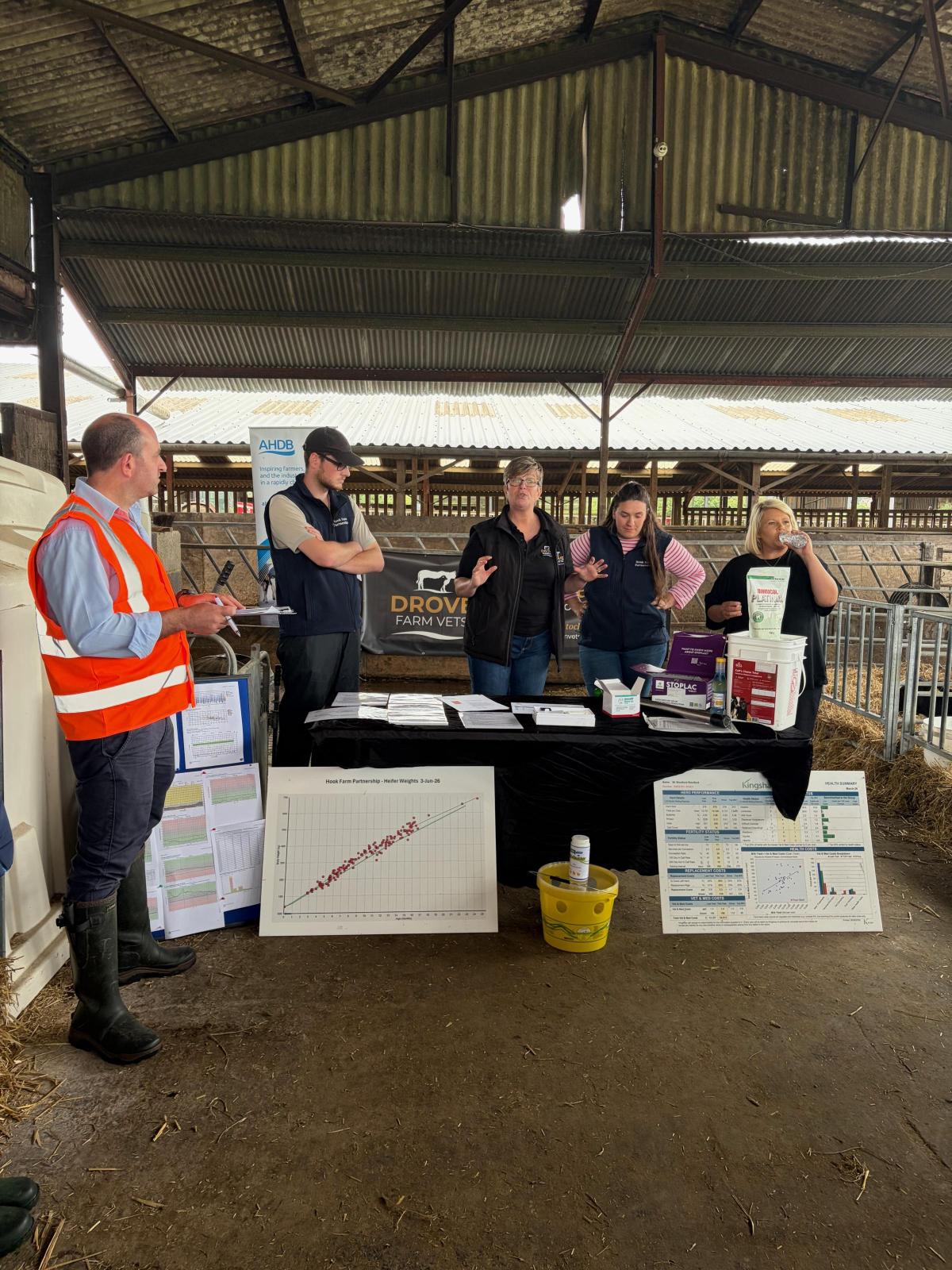
The Woolford family, who run the 280-cow herd at Hook Farm near Swindon, won the Fertility Health and Welfare Award and the High-Performance Dairy Farm Award at the 2025 Cream Awards. Farmers recently visited the unit during an AHDB and British Dairying Winners Walk to see the management practices behind the results.
Speaking during the event, Dr Jessica Cook, research and development manager for sponsor Feed For Growth (Volac), said the farm's ability to calve heifers at an average age of 23 months while achieving an average lifetime daily yield of 19kg per cow per day made it stand out.
Dr Cook said: “From my own PhD study and other studies since, we know heifers calving at 24 months with adequate body size have better fertility, produce more milk, have better udder health and have the best longevity – this improved lifetime performance makes them more profitable and has an environmental benefit with a lower carbon footprint per litre of milk.
“Here, 78% of heifers are also calving in at less than 25 months. Achieving a young calving age doesn’t just happen by chance, it’s down to a lot of hard work and attention to detail.”
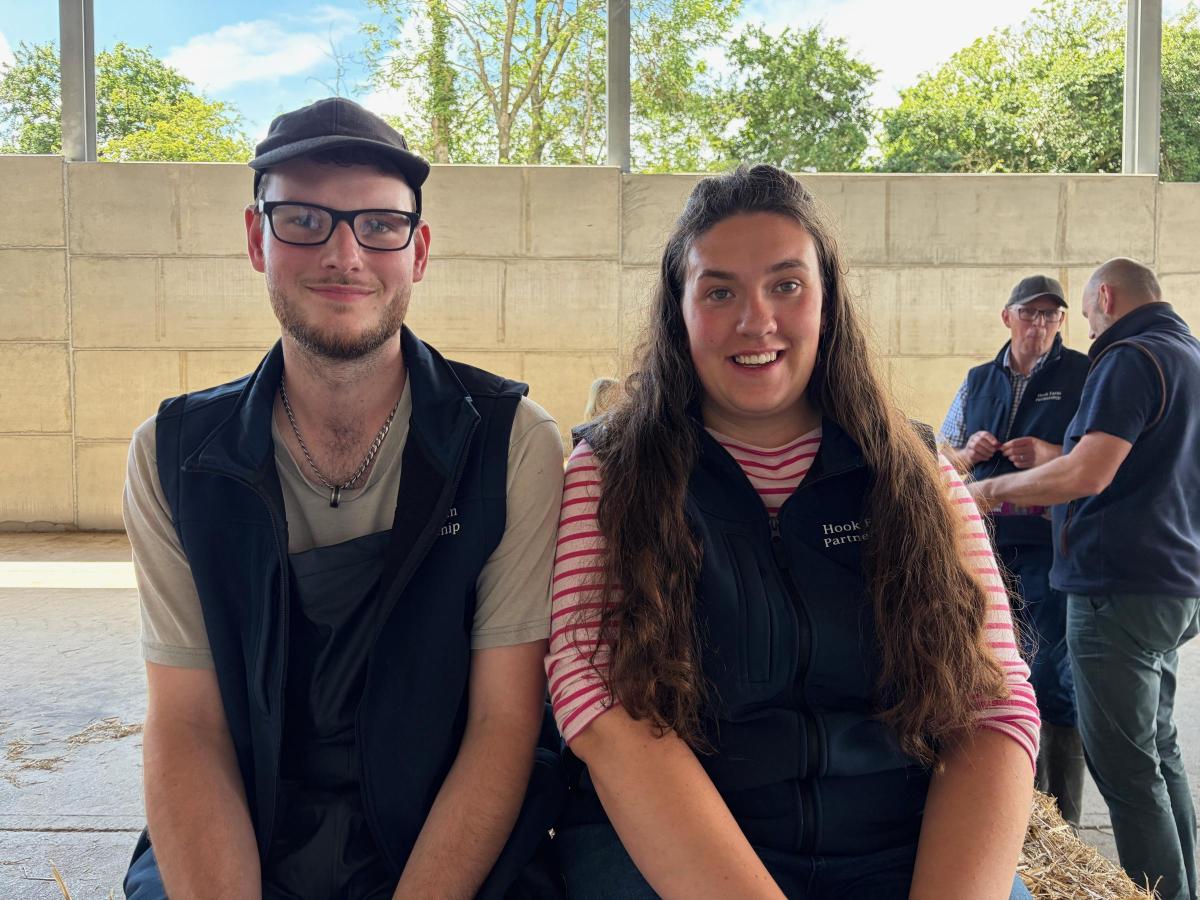
General farm workers Katie Walker and Troy Peach, who manage the calves, believe success comes down to what they describe as "colostrum, cleanliness and communication."
Calves remain with their dam for between 12 and 24 hours before receiving three litres of colostrum by tube within two hours of birth, followed by a further two litres within the next four hours. Every batch is tested using a Brix refractometer and, where readings fall below 22%, it is topped up with colostrum powder. Blood samples are also taken to monitor antibody uptake, with results reviewed by vet Kate Brodie during routine fortnightly visits.
Communication across the farm is another priority. Regular meetings between staff and the vet ensure any concerns are picked up quickly, while a WhatsApp group and a whiteboard in the calf shed keep everyone updated on feeding groups, treatments and day-to-day management.
Troy said: “It’s not often we have big issues necessarily, but even if it’s a small (uplift) in scour cases at a specific time, we can deal with that straight away. It’s trying not to leave a problem too long for it to become a major outbreak.”
That approach proved its worth when the farm experienced a scour outbreak last autumn. Tests identified cryptosporidiosis and rotavirus, allowing a treatment plan and vaccination programme to be introduced quickly.
Troy added: “Within two weeks we had decided about vaccinations, but also a treatment plan for the crypto itself. Everything on the farm, if you try and do it as quick as possible, you’ll get the best reward from it.”
Dry cows are now vaccinated against rotavirus, coronavirus and E. coli to boost antibodies in colostrum, while calf accommodation is cleaned thoroughly between batches using pressure washing, steam cleaning and disinfectants effective against cryptosporidiosis.
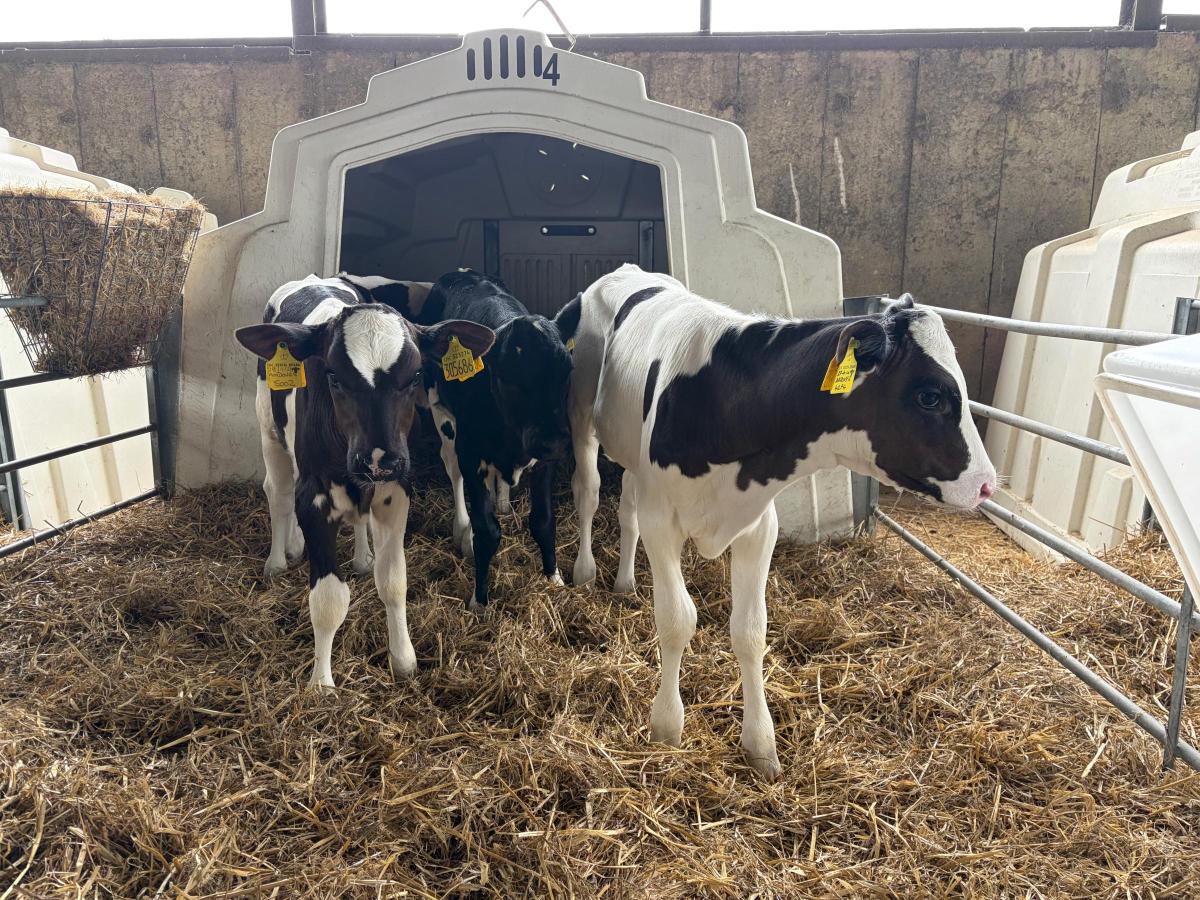
Consistency is another key focus. Calves move into individual pens with raised slatted floors before progressing to group hutches of four once they are drinking confidently from a teat. Milk is mixed and delivered using a trolley to ensure every calf receives the correct quantity at the right temperature, regardless of who is feeding. Fresh water, concentrate and chopped straw are available from day one.
Growth rates are checked every eight weeks after weaning to ensure calves remain on target for 400kg liveweight at 400 days. On average, calves are achieving daily liveweight gains of 900g from birth to 400 days.


Share