


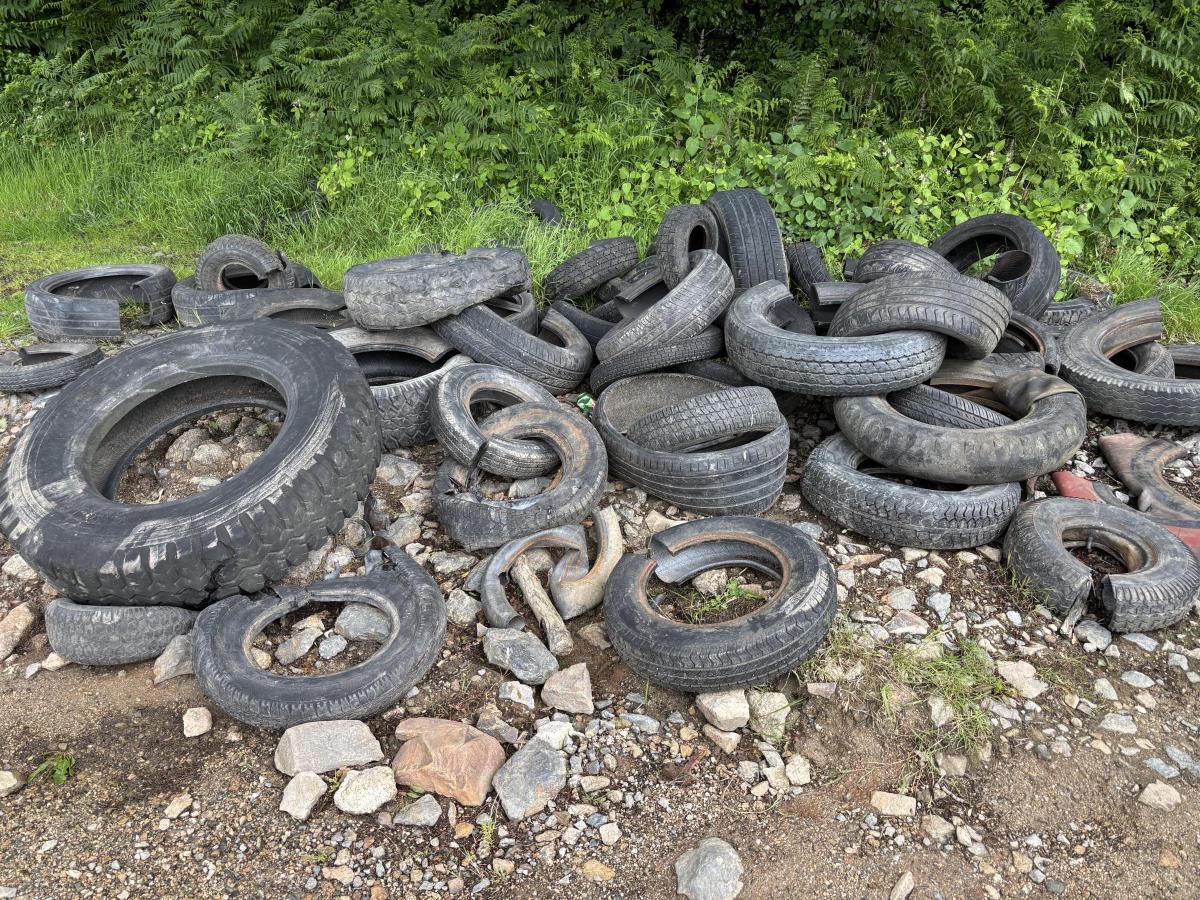
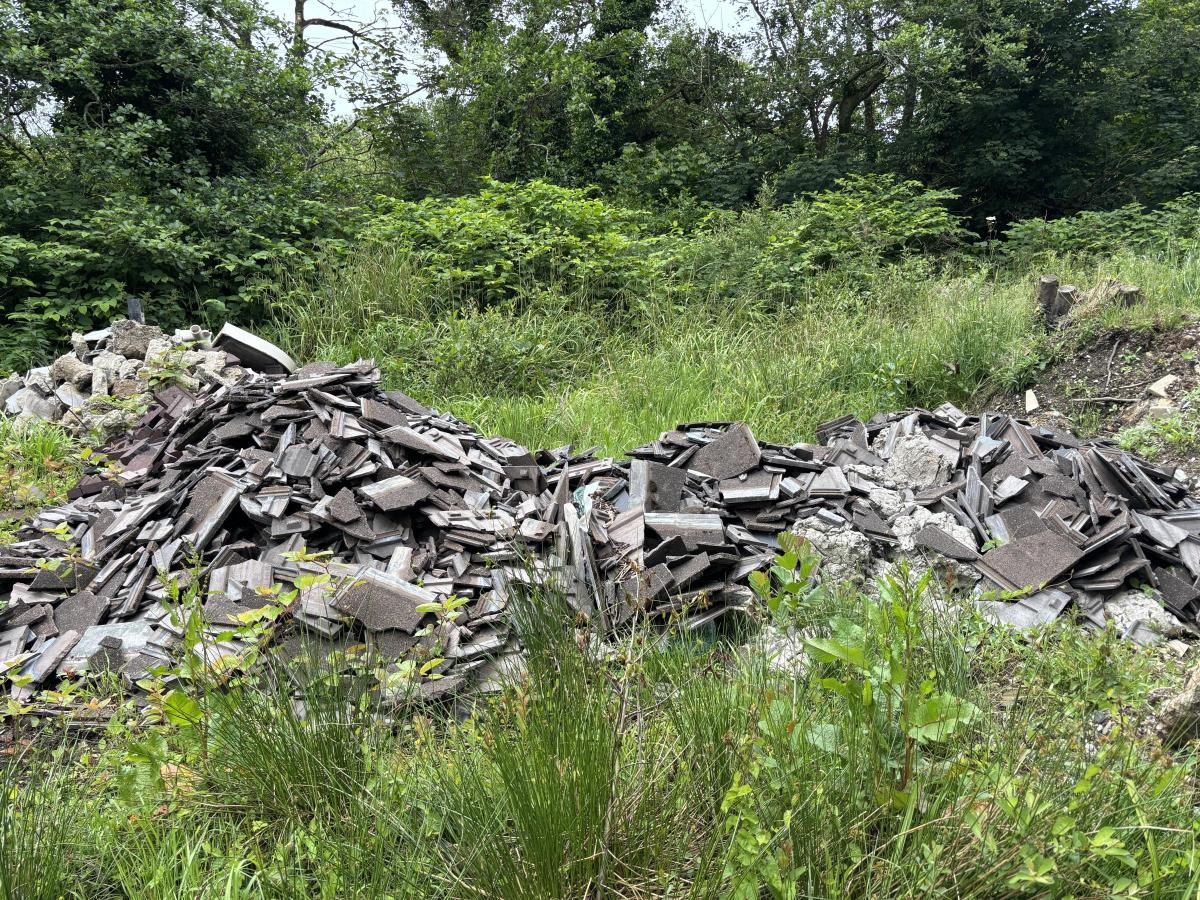

Cornwall Council has responded to concerns raised by its own members about increases in fly-tipping in the county, saying action will be taken against anyone found dumping waste illegally.
Speaking at a meeting of the local authority’s community wellbeing committee last week, Louise Blackman, the Reform UK councillor for Perranporth, said there has been an increase in the number of reports of illegal dumps and rats.
Cllr Andrew Mitchell, the committee’s chairman and Independent member for St Ives West & Towednack, commented that there had been a “massive increase” in rats in St Ives.
The comments about fly-tipping came in the same week that we revealed the location of a 25-acre site near Camborne, which is being investigated as one of the UK’s largest ‘waste crime’ locations in the UK.
Cornwall Council says that its enforcement team had no previous knowledge of the site and that the regulation of waste sites sits with the Environment Agency.
A spokesperson for the local authority has also pointed out that most fly-tips do not include food and are therefore unlikely to attract rodents.
They said: “Fly-tipping can pose risks to both people, animals and marine life. It also costs a significant amount of money to clear, which is ultimately paid for by taxpayers and private landowners.
“Cornwall Council has invested additional resources to tackle fly-tipping and to trace those responsible when fly-tips do occur.
“When a fly-tip is reported, we look for evidence that may help identify where the rubbish has come from. We also use covert cameras to record incidents at fly-tipping hotspots.”
Cllr Thalia Marrington, cabinet member with responsibility for community safety and public protection, added: “There is no excuse for fly-tipping and we will take action against anyone who is caught fly-tipping or littering in Cornwall.
“I urge people to be responsible with their rubbish and if they are paying someone to take items away, to make sure they use a licensed waste carrier.”
Fly-tipping is a serious offence and carries tough penalties. Offenders can face Fixed Penalty Notices of up to £1,000 for large‑scale or hazardous dumping and £500 for smaller incidents.
In the most serious cases, prosecution through the courts can result in unlimited fines and even imprisonment for up to five years. Vehicles used in fly-tipping may also be seized and destroyed, and offenders can be ordered to cover clean-up and legal costs.
Anyone who sees fly-tipped waste on public land is urged to report it and to submit any evidence, such as pictures or videos that may help identify those responsible, via the Cornwall Council website.
If a fly-tip is obstructing a road, it should be reported to the police by calling 999.
You can also report fly-tips anonymously by calling Crimestoppers on 0800 555 111 or visiting the Crimestoppers website.
“Businesses, no matter how small, must use a licensed waste carrier to remove any commercial waste,” added the council spokesperson. “Residents must also use a licensed waste carrier when paying someone to remove household waste.”
You can check if a business or individual has a waste carrier’s licence on the Environment Agency website.
Advice for businesses on commercial waste and the law can also be found on the Cornwall Council website.


Share